


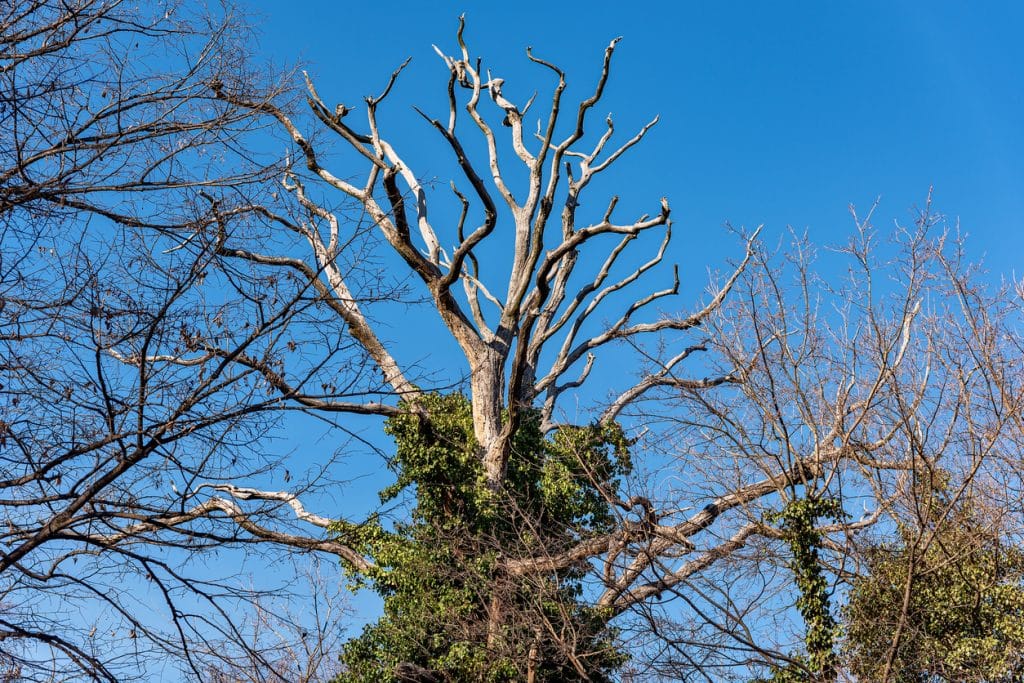
By mid-summer, many homeowners across Birmingham and Bessemer start noticing trees that just do not look right. Maybe the canopy is thin, branches are bare, leaves are dropping early, or one side of the tree looks completely lifeless.
The good news is that a struggling tree is not always a dead tree.
Summer heat in Alabama can expose problems that have been building for months or even years. Drought stress, root damage, compacted soil, disease, storm damage, and insect activity can all weaken a tree long before it completely fails.
Knowing the difference between a stressed tree and a dead one can help you make the right decision before the problem becomes dangerous or irreversible.
Why Trees Often Decline in Summer
Trees work hardest during summer. High temperatures, dry soil, humidity, and active pest pressure all increase stress on already weakened trees.
In Alabama, summer heat can amplify issues caused by:
- Spring storm damage
- Root disturbance from construction
- Soil compaction
- Poor drainage
- Drought conditions
- Disease or insect pressure
- Previous years of stress
Sometimes a tree survives spring leaf-out but lacks the energy reserves to stay healthy through summer.
This is especially common in mature trees that appeared “mostly fine” earlier in the year.
Signs Your Tree May Be Stressed — Not Dead
A stressed tree often still has living tissue and may recover with proper care.
Look for these common signs of stress:
Thin or Uneven Canopy
If some sections of the canopy have leaves while others look sparse or weak, the tree may still be alive but struggling.
This can happen after root stress, drought, or pest activity.
Wilting or Scorched Leaves
Leaves that curl, brown around the edges, droop, or fall early are common drought stress symptoms during Alabama summers.
Gray’s Tree Service often sees these symptoms during hot, dry stretches in Birmingham and surrounding communities. Bio-hydration and soil care treatments are commonly used to help trees recover from drought stress and soil compaction.
Small or Undersized Leaves
If new leaves are much smaller than normal, the tree may be conserving resources due to stress.
Delayed Growth
A tree that produces little to no new growth may be struggling to support itself.
Premature Leaf Drop
Some stressed trees shed leaves early in an attempt to survive heat and drought conditions.
Insect or Disease Activity
Summer pests often target weakened trees first. In Alabama, stressed trees are especially vulnerable to issues like pine bark beetles, scale insects, and fungal diseases.
Signs a Tree May Be Dead
A dead tree usually shows widespread structural and biological failure.
Here are the biggest warning signs.
Brittle Branches
Dead branches snap easily and feel dry and hollow. Healthy branches tend to bend slightly before breaking.
A simple test is to bend a small twig. If it snaps immediately and appears dry inside, that section may be dead.
No Green Under the Bark
Try the “scratch test” on a small branch.
Lightly scratch the bark with your fingernail or a pocketknife.
- Green underneath = living tissue
- Brown and dry underneath = dead tissue
Test several branches throughout the tree before making conclusions.
Significant Bark Loss
Large sections of missing or peeling bark can indicate severe decline.
When bark starts falling off the trunk in large patches, the tree may no longer be able to transport water and nutrients effectively.
No New Growth
If the tree has not produced leaves or new buds during the growing season, it may already be dead.
Large Dead Sections in the Canopy
Dead upper limbs, bare sections, or entire sides of the canopy without foliage are major warning signs.
Fungal Growth at the Base
Mushrooms or fungal conks growing near the trunk or roots may indicate internal decay.
This does not always mean the tree is dead, but it can signal serious structural problems.
Simple At-Home Checks Homeowners Can Do
You do not need to be an arborist to spot early warning signs.
Here are a few safe ways to evaluate your tree:
Check for Flexible Branches
Small live branches usually bend slightly. Dead branches break easily.
Perform a Scratch Test
Test multiple areas of the tree to check for green living tissue beneath the bark.
Look at the Base of the Tree
Watch for:
- Cracks in the soil
- Fungal growth
- Root exposure
- Leaning
- Cavities near the trunk flare
Compare With Nearby Trees
If similar trees in the neighborhood are healthy while yours is struggling, it may indicate a tree-specific problem rather than seasonal stress.
When a Tree Can Recover
Many stressed trees improve with proper health care and time.
Recovery is more likely when:
- At least 50% of the canopy is healthy
- The trunk remains structurally sound
- There is still active leaf production
- Root damage is limited
- Stress is identified early
In many cases, improving soil conditions, reducing compaction, proper watering, and targeted plant health care treatments can help trees regain vigor.
Deep root fertilization and soil health treatments are commonly used to strengthen stressed trees and shrubs by improving soil conditions and root performance.
When Removal Should Be Considered
Sometimes tree removal is the safest and most practical option.
A professional inspection is especially important if you notice:
- Large dead limbs over structures
- Significant trunk decay
- Sudden leaning
- Cracks in major limbs
- Multiple falling branches
- More than 50% canopy loss
- Trees near homes, driveways, or power lines
Dead or severely declining trees become much more dangerous during summer thunderstorms and high winds.
Even trees that appear stable can fail unexpectedly when internal decay is present.
Summer Tree Safety Matters
One of the biggest risks during Alabama summers is delayed limb failure.
Heat stress weakens wood structure over time, and heavy summer storms can cause large branches to fall without warning.
If you are unsure whether a tree is safe, avoid:
- Climbing the tree
- Cutting large limbs yourself
- Parking vehicles beneath damaged branches
- Ignoring visible cracks or hanging limbs
Tree removal and hazardous pruning should always be handled by trained professionals with the proper equipment.
Do Not Wait Until the Tree Completely Fails
Trees often show warning signs long before they die completely.
The earlier a problem is identified, the better the chances of saving the tree — or safely removing it before it becomes a hazard.
If your tree looks stressed, uneven, thin, or partially dead this summer, a professional inspection can help determine the next step.
Gray’s Tree Service has served Greater Birmingham since 1995 with dependable, expert tree care. From storm response to proactive plant health, our local pros deliver safe, courteous service.
Ready for a free tree service estimate with one of our certified arborists? Call us today at 205-927-2652 or contact us online.
