


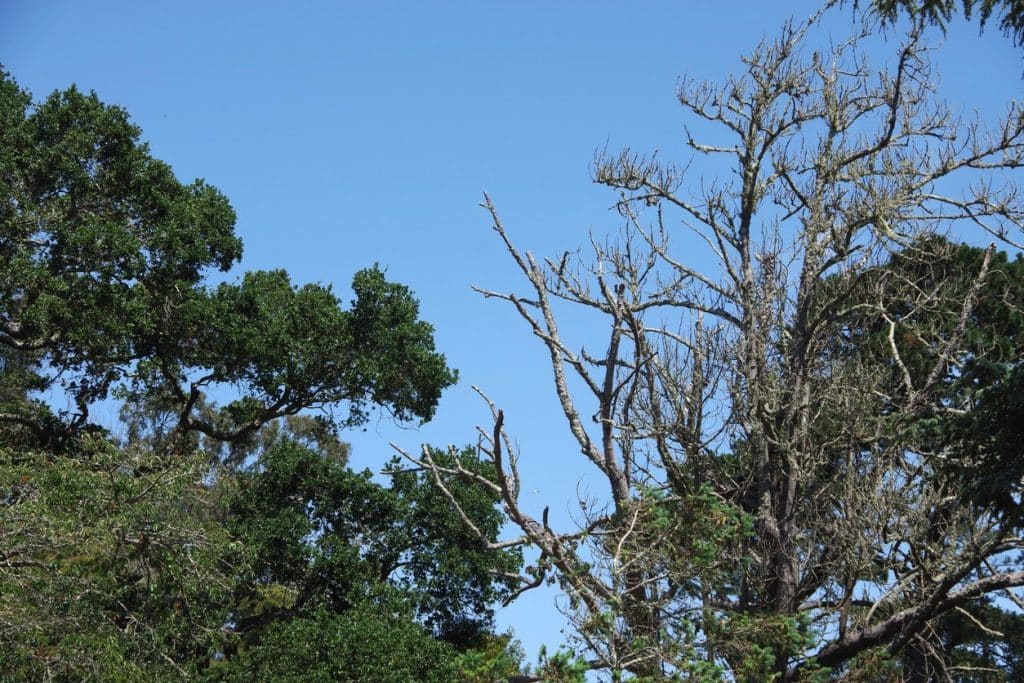
If your tree looks “off” this spring—uneven growth, thin spots, or leaves dropping from the inside—you’re not alone. Across Birmingham and Bessemer, we see this every year as trees transition out of winter.
The tricky part? Some of these changes are completely normal. Others are early warning signs of stress that shouldn’t be ignored.
Here’s how to tell the difference—and what to do next.
Common Signs Your Tree May Be Struggling
Early-season tree stress often shows up in subtle ways. Keep an eye out for:
- Thinning canopy or fewer leaves than usual
- Uneven growth (one side fuller than the other)
- Sparse or bare patches in the crown
- Interior leaf drop (leaves falling from inside branches)
- Smaller-than-normal leaves
These symptoms don’t always mean your tree is in trouble—but they’re worth paying attention to, especially in Alabama’s climate.
Why Trees Look Uneven in Alabama Each Spring
Spring in Alabama can be tough on trees. Even healthy trees may show uneven growth due to a mix of environmental stressors.
1. Lingering Winter and Early Spring Stress
Late cold snaps, fluctuating temperatures, and heavy rains can disrupt how trees leaf out. Some branches may respond faster than others, creating an uneven appearance.
2. Soil Conditions and Root Stress
Compacted soil or poor drainage limits how well roots absorb water and nutrients. When roots struggle, the canopy often shows it first.
Services like soil care and deep root support are designed to improve these conditions and help trees recover stronger over time.
3. Past Weather Damage
Storms, drought, or heat from the previous year can have delayed effects. A tree may leaf out unevenly because certain limbs were weakened months ago.
4. Early Pest Activity
Insects like aphids, scale, and borers become active in spring—often targeting stressed trees first. Signs may include sticky residue, patchy growth, or thinning leaves.
5. Spring Diseases
Cool, wet conditions in Alabama create the perfect environment for issues like anthracnose or leaf spot, which can cause early leaf drop and irregular canopy growth.
Normal vs. Problem: How to Tell the Difference
Not every uneven tree is a problem. Here’s a simple way to evaluate what you’re seeing:
Likely Normal
- Slightly uneven leaf-out early in the season
- Minor interior leaf drop as the canopy fills in
- Temporary thin spots that improve over a few weeks
Worth Monitoring
- Noticeable thinning that doesn’t improve by late spring
- One section consistently lagging behind the rest
- Repeated leaf drop or discoloration
Time to Act
- Large dead or bare sections
- Rapid thinning or worsening canopy loss
- Signs of pests, disease, or bark damage
- Multiple stress symptoms happening at once
If you’re unsure, it’s always better to have a professional take a look early before the issue spreads.
What You Can Do to Support Tree Health
Even if the issue is mild, a few simple steps can make a big difference:
Water Consistently
Trees need steady moisture in spring—especially after dry spells. Deep watering is better than frequent shallow watering.
Improve Soil Conditions
Healthy roots mean a healthier canopy. Addressing compacted or nutrient-poor soil helps trees recover from stress faster.
Mulch Properly
Apply 2–3 inches of mulch around the base (but not against the trunk) to retain moisture and regulate soil temperature.
Inspect Regularly
Check leaves, bark, and branches every few weeks for changes. Catching problems early is key.
Schedule a Professional Inspection
Some issues—like root stress, pests, or disease—aren’t obvious until they’ve progressed. A trained eye can spot early warning signs and recommend the right solution.
Pro Tip: Spring Is a Critical Window
Many tree issues start quietly in spring but become major problems by summer. Early care—especially soil health, hydration, and monitoring—can prevent costly damage later in the year.
When in Doubt, Get Expert Guidance from Gray’s Tree Service
If your tree still looks uneven or continues thinning as the season progresses, it’s time to take a closer look.
Gray’s Tree Service has served Greater Birmingham since 1995 with dependable, expert tree service and health care. From diagnosing early stress to improving long-term health, our team helps homeowners protect their trees year-round.
Ready for a free, no-pressure estimate? Call us today at 205-927-2652 or schedule by contacting us online.
